In the summer of 2024, California made the biggest changes to the Private Attorneys General Act (PAGA) since it became law in 2004. PAGA lets workers step into the shoes of the state and sue employers for Labor Code violations, then share in the penalties. The reforms kept that power but reshaped how it works.
This guide walks through the main changes in plain terms. It is general information about California law, not advice about your situation. If you think your employer broke wage and hour rules, a paga lawyer can look at the facts and tell you how the new rules apply.
When the new rules apply
Two bills, AB 2288 and SB 92, were signed on July 1, 2024. The changes generally apply to PAGA notices filed with the state on or after June 19, 2024. Cases built on older notices usually follow the prior rules. Timing matters here, so one of the first things to pin down is when the required notice to the Labor and Workforce Development Agency (LWDA) was filed.
Workers now keep a bigger share
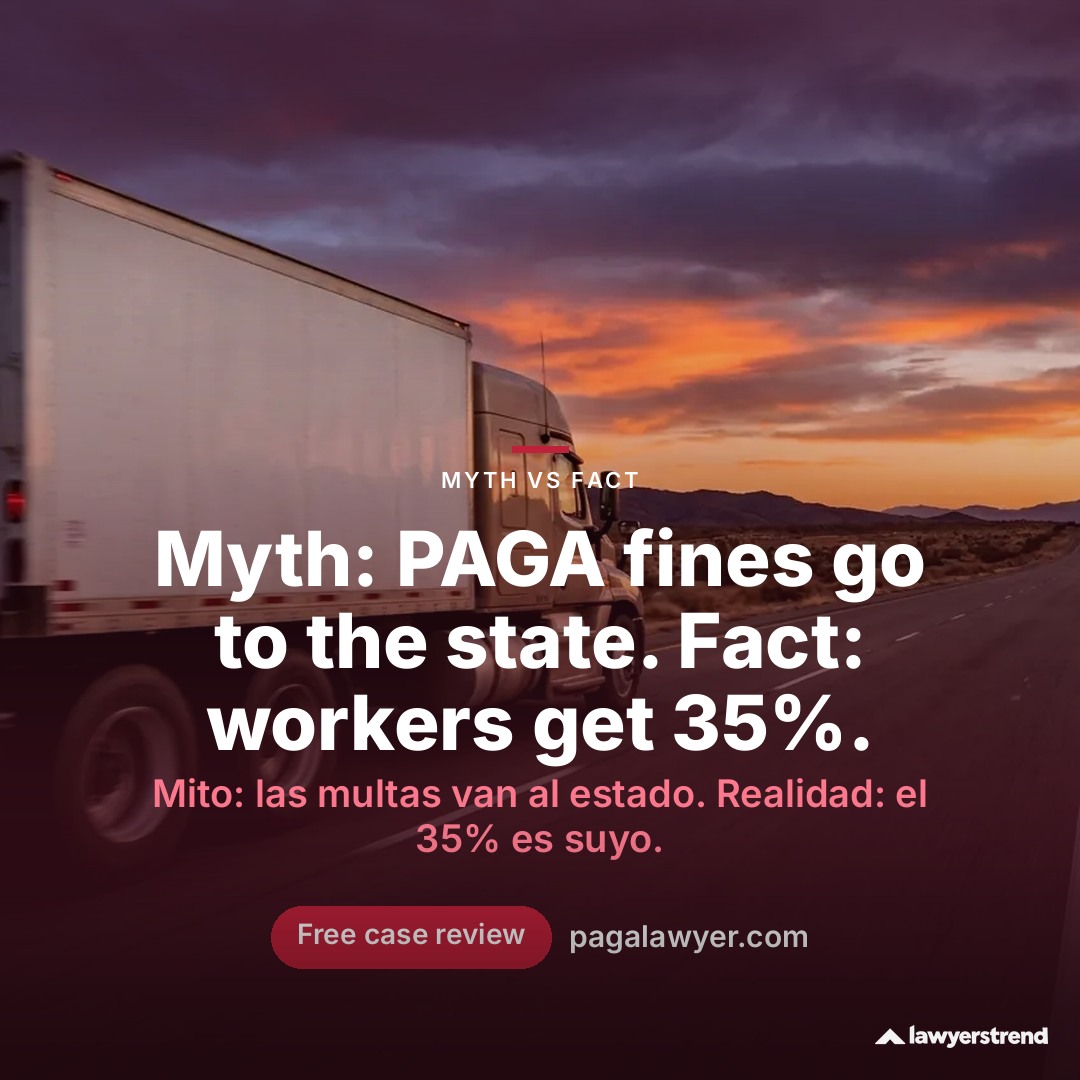
Under the old law, 75% of any civil penalties went to the state and 25% went to the affected employees. The reforms raised the workers' share. Now 65% goes to the state agency and 35% goes to the aggrieved employees. The headline penalty structure in the Labor Code still centers on per-pay-period amounts, but the split sends more money to the people who were actually underpaid.
You must have experienced the violation
One of the biggest shifts is about standing, meaning who is allowed to sue. Before, courts let a worker who suffered one type of violation bring claims for every other Labor Code violation at the company, even ones they never personally faced. The reforms narrowed that. Now a worker can generally pursue only the violations they personally suffered. This keeps the person at the center of their own case.
Penalty caps reward employers who fix problems
The reforms created new ways for employers to lower penalties by taking "reasonable steps" to comply. An employer that took reasonable steps before getting a PAGA notice can face penalties capped at a smaller percentage of the maximum. An employer that takes reasonable steps within a set window after the notice can also see reduced exposure. Reasonable steps might include payroll audits, updated policies, or training.
For workers, this means two things. First, documenting the violation clearly still matters, because it drives whether an employer can claim it acted reasonably. Second, these caps change the math of settlement, so understanding them early helps set realistic expectations. You can read related explainers in the PAGA Guide guides.
New cure and early resolution paths
The reforms expanded the chance for employers to "cure" certain violations, especially wage statement problems, before penalties pile up. There are also new early resolution tracks. Smaller employers (generally those with fewer than 100 employees) can ask the LWDA to help resolve a claim early. Larger employers can request an early evaluation conference with the court and a chance to fix issues. These steps can move cases faster, but they also add deadlines a worker must track.
Courts can manage the scope
The reforms gave judges clearer authority to manage PAGA cases, including limiting the evidence and narrowing claims so a case stays workable. Courts can also order injunctive relief, meaning an order that the employer change an unlawful practice, not just pay penalties. For workers, that can mean a fix that protects coworkers going forward.
What this means for you
- Deadlines are strict. PAGA requires written notice to the LWDA before filing, and there are time limits to act. Missing them can end a claim.
- Records help. Pay stubs, schedules, time records, and notes about missed breaks or unpaid time all support a claim.
- Your own experience is the core. Because standing is narrower, focus on the violations that happened to you.
PAGA is technical, and the 2024 changes added new steps on top of old ones. Many workers compare it to a regular wage claim or a class action before deciding what path fits. If you want help, you can start a free case review, browse employment lawyers, ranked, or read this guide to choosing an LA employment lawyer.
Frequently asked questions
- Do the 2024 PAGA changes apply to my case?
- The reforms generally apply to PAGA notices filed with the state on or after June 19, 2024. Cases based on earlier notices usually follow the prior rules, so the filing date is a key first question.
- How much of a PAGA penalty do workers get now?
- Under the reforms, 35% of civil penalties go to the affected employees and 65% goes to the state agency. The old split was 25% to workers and 75% to the state.
- Can I still sue for violations that happened to coworkers?
- Generally no. The reforms narrowed standing so a worker can pursue the violations they personally experienced. A lawyer can explain how this applies to your facts.
- Can my employer avoid penalties by fixing the problem?
- The reforms let employers lower penalties by taking reasonable steps to comply and by curing certain violations, especially wage statement errors. This does not erase a valid claim but can change its value.
Sources
- California Labor Code § 2699 (PAGA, leginfo)
- California Department of Industrial Relations
Attorney advertising. This article is general information, not legal advice, and reading it does not create an attorney-client relationship. LawyersTrend is not a law firm. Laws change; talk to a licensed California attorney about your situation. Past results do not guarantee a similar outcome.